
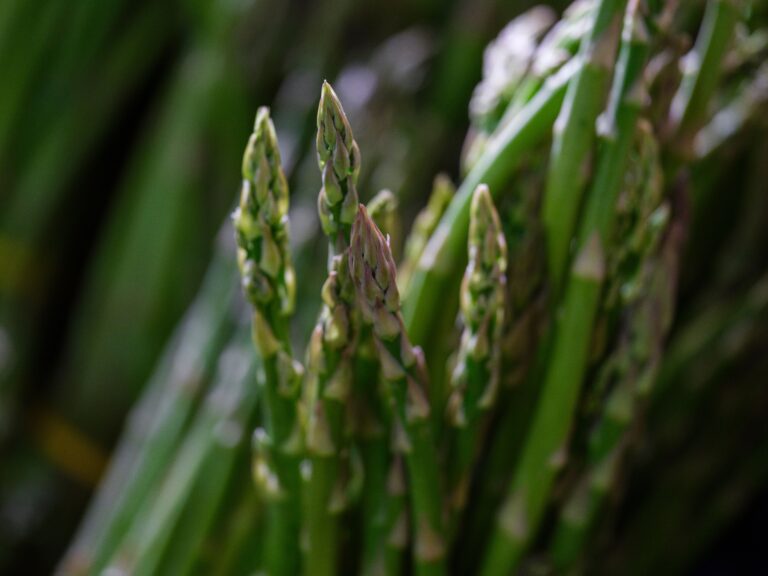
Unexpectedly, there is a growing body of scientific evidence recommending asparagus root extract for menopause.
There has been a recent flurry of studies demonstrating the benefits of asparagus root extract for menopause.
Asparagus racemosus, or wild asparagus, is in the same family as, but distinct from, the Asparagus officinalis that we eat. In traditional herbalism, the most valued part of the plant is the root, which is known in the traditional Ayurvedic system of healing as shatavari.
Several recent studies have established shatavari as a potentially important herb for menopause and perimenopause (Cureus. April 8, 2024;16(4):e57879; Functional Foods in Health and Disease 2025;15(7):415-443; J Am Nutr Assoc. 2025 May 28:1-11).
The latest is a double-blind study that gave 73 perimenopausal women either a placebo or 300mg of shatavari root extract for 8 weeks.
Once again, the shatavari proved itself. Improvement on both the Menopause Rating Scale and the Menopause-Specific Quality of Life Questionnaire were significantly greater in the asparagus group. Hot flash frequency was reduced significantly more on the shatavari. Estradiol, follicle-stimulating hormone and triiodothyronine were significantly better in the herb group.
On the Profile of Mood States, fatigue scores were significantly more improved in the asparagus group, and on the Perceived Stress Scale, there were significantly greater reductions on the shatavari.
There were no adverse effects, suggesting that shatavari is not only effective, but safe, benefitting physical and psychological symptoms and hormone levels.
Int J Womens Health. November 3, 2025;17:4057-4073.